
How To Waterproof A Shower Bench [Wooden, Stone, and Plastic]
Seen those shower benches on interior designing/decorating digests? Surely, they add a rich exquisite look, finesse and utility.
Shower benches, also called transfer benches, might be pre-constructed or attached or bought separately. Usually, when the shower rooms or washrooms are smaller in size, foldable or removable benches are preferred.
Whatever be the case, it’s always important to maintain and take care of the shower benches.
These are most of the time soaked in water, hence leading to the deterioration of the bench material along with the formation of molds and mildew. Waterproofing serves the exact right purpose to shower benches.
In this article, I’ll share different ways of waterproofing shower benches with you. However, before that let’s understand why a shower bench is at all required!
What Is Shower Bench Used For?
Most people who haven’t yet put a shower bench believe that these are nothing but a waste of space and a showpiece. On the contrary, shower benches are really helpful in the following ways:
1. Relax
After a long tiresome day, wouldn’t it feel nice to drench yourself under the warm shower while peacefully sitting on the comfortable shower bench? Sounds great!
Elder people can especially benefit from such a setting and enjoy bathing without having to think about stress on the body.
2. Leg maintenance
It’s usually believed that such benches especially benefit females for beauty purposes. However, males too need something to maintain their legs.
Leg maintenance includes washing, shaving or waxing legs and feet. Instead of bending all the way down or sitting on the floor itself, using a shower bench would be a much more comfortable option.
3. Storage
Those who own one would vouch for this feature. Shower benches usually have extra space to store things. This extra space usually comes as an extra shelf under the seat.
It would be especially useful for tight spaces with a lot of utilities to store. Alternatively, when you are shampooing or conditioning, you need to keep the bottles somewhere, right? Just keep them on it. That’s pretty much it!
Now that we know its usefulness, it’s time to know the different types of benches or the different materials used for shower benches. This would help us to understand their waterproofing process better!
Types Of Shower Benches
Shower benches are made out of various materials like wood, stone or plastic. Each material has its own feature and utility.
Wooden shower benches are usually made out of teak, bamboo, acacia and cedar. These are very popular and viable options with varying price range and life span. Wooden shower benches can be fixed or movable.
Teak is the most popular option as it is highly durable, quite affordable and naturally resistant to water. Teak is followed by cedar and bamboo.
Shower benches made out of stone are usually fixed and immovable due to their heavyweight. These are usually made out of granite, marble and quartz.
People prefer stone benches over wooden ones, usually, due to their beautiful rich look and finish. However, it gets difficult to sit on stone benches during winter as these become very cold. These are also quite expensive.
Plastic shower benches are movable. These are mainly for elderly people and medical purposes.
How to Waterproof Wooden Shower Bench?
1. Waterproofing Wooden Shower Bench using Oils
Oils are generally used for waterproofing wooden items. For shower benches, oils like teak oil, Tung oil and linseed oil can be used.
Oils preserve the natural look and shine of wooden shower benches. They retain the natural oils of wood and provide an additional layer of protection.
Teak oil is a mixture of various things like varnish, linseed oil, lacquer, teak oil and others. It is especially useful for teak wood but can be used on other woods too. So, if you have a real wood shower bench (the most common shower bench) then you can trust teak oil.
| Photo | Product | Buy |
|---|---|---|
 | Star brite Premium Golden Teak Oil - Sealer, Preserver, & Finish for Outdoor Teak & Other Fine Woods, 32 oz | Check Price On Amazon |
Tung oil is a drying agent used in inks, paints and varnishes and is extracted from the Tung tree nuts. It’s especially used to waterproof wooden surfaces of all kinds.

Linseed oil is another drying oil and protects the wood from scratches and moisture. However, linseed needs to be boiled before application.

Since shower benches come in contact with moisture every day, oil should be applied quarterly for best results.
Required Material:
- Oil
- Brush
- Mineral turpentine
- Sandpaper
- Cloth
Step by Step Process:

1. Clean and dry
If the shower bench isn’t clean already, this should be a mandatory step. However, one should always clean the bench after each use to prevent the development of any mold.
Clean the shower bench using a mixture of mild dish wash and water. This would remove any dirt accumulated on it.
Now let the bench dry for 3-4 hours.
2. Smoothen it
Use sandpaper to smoothen the edges of the bench. It would make it hassle-free application of oils.
3. Apply oil
Now it’s time to actually apply the oil using a brush. You can mix the oils with other chemicals like turpentine oil/mineral turpentine to reduce the oil’s thickness as per your desired consistency.
4. Wait and reapply
The mixed oil solution would, at the most, take a couple of hours to dry completely. After that, you can reapply the oil for better protection.
2. Waterproofing Wooden Shower Bench using Sealant and Stain
Sealant and stain is another way of waterproofing the shower benches. Sealant can be used singly to waterproof as well. However, the mixture of color pigment along with sealant makes it a durable option.
Sealants like varnishes, polyurethane are popular choices for dealing with shower benches. You can use lacquer too if your bench can be taken outside. This is because lacquer creates a lot of fumes and applying it within a closed area would cause problems. Sealants have silicone in them which makes them waterproof.
Sealants when used with stains add a cool personal touch and color to your shower room. Alkyd-based sealant along with stains leaves a light stain on the wood.
| Photo | Product | Buy |
|---|---|---|
 | Thompson's WaterSeal Semi-Transparent Waterproofing Stain (Woodland Cedar) | Check Price On Amazon |
Required Material:
- Sealant
- Stain
- Cloth /brush
- Sandpaper
Step by Step Process:
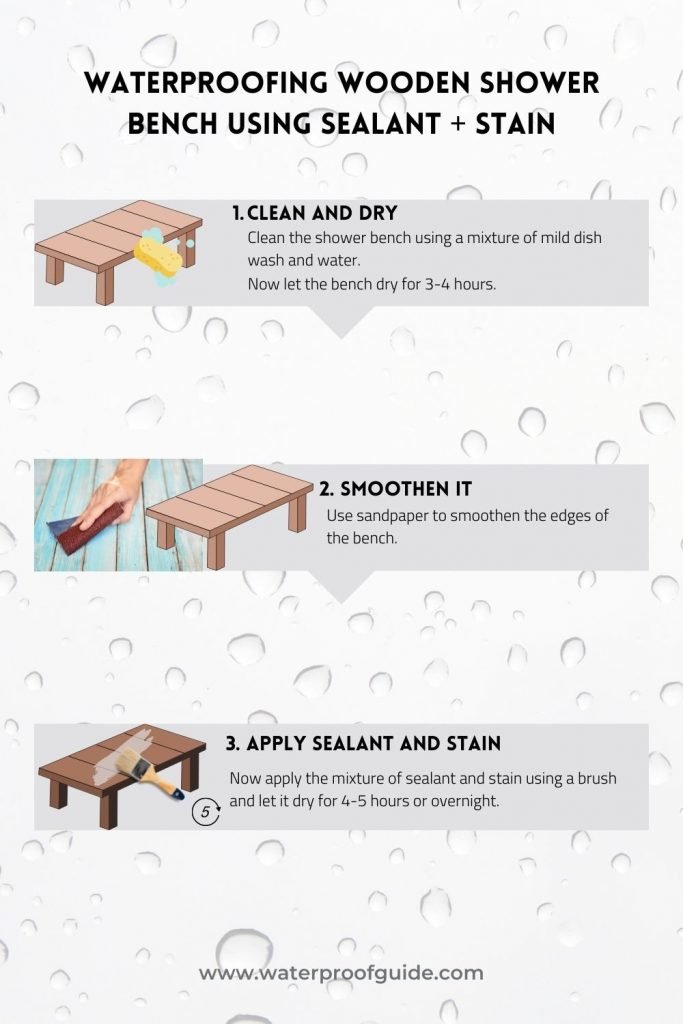
1. Clean, dry and smoothen
Similar to oiling, you need to clean, dry and smoothen the surface using sandpaper before applying sealant and stain.
2. Apply them
Now apply the mixture of sealant and stain using a brush and let it dry for 4-5 hours or overnight. You can use a second coat to get a premium finish on the bench.
Precautions:
You should not shake the sealant before waterproofing it on the bench. This would result in the formation of bubbles and foam. These bubbles would stay on the bench’s surface even after application and drying.
How to Waterproof Stone Shower Bench?
Waterproofing Stone Shower benches:
Granite and marble are extremely porous materials. When used as a shower bench, they must be properly sealed. Otherwise, your precious investment would lose its value in no time.
Waterproofing Stone Shower Benches Using Silicone
Silicone is a waterproof material and is widely used to waterproof various things. As mentioned above, silicone is also an active ingredient in sealants.
The corners of stone shower benches are especially tough to handle. On the other hand, these corners are most vulnerable and prone to mold and mildew.
Therefore, to waterproof your stone shower bench, these corners should be waterproofed primarily.
Check out this silicone made especially for areas prone to constant moisture exposure:
| Photo | Product | Buy |
|---|---|---|
 | GE Sealants & Adhesives Advanced Silicone 2* Kitchen & Bath Sealant, 10.1oz, White | Check Price On Amazon |
Required Material:
- Shower and bath waterproof silicone
- Chalk
Step by Step Process:
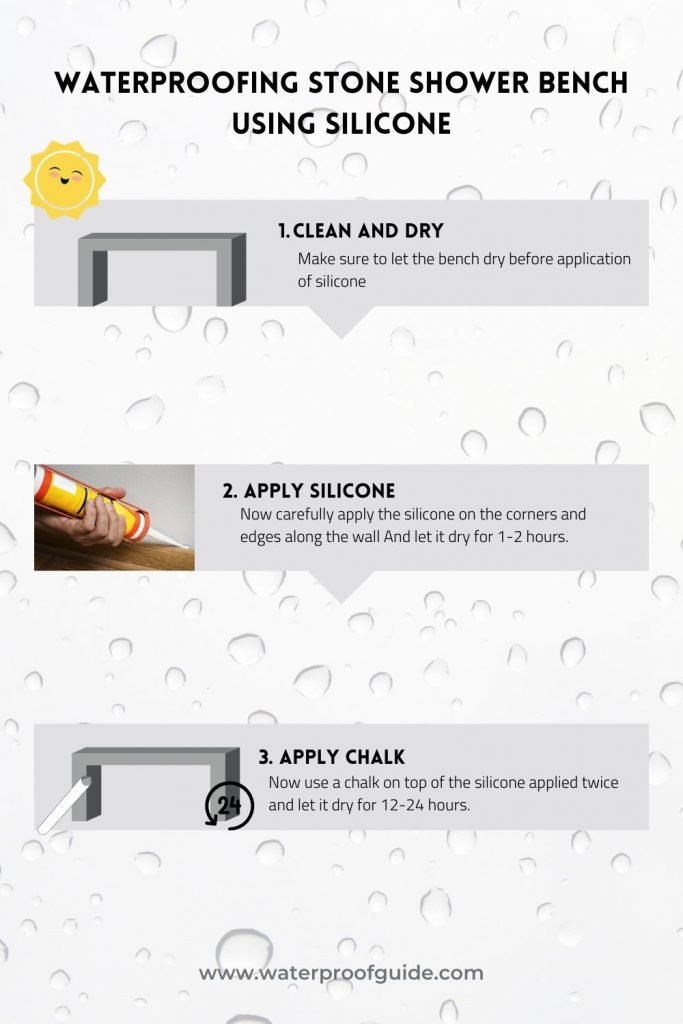
1. Dry
Make sure to let the bench dry before application of silicone
2. Apply the silicone
Now carefully apply the silicone to the corners and edges along the wall.
After that, let the silicone dry for 1-2 hours. It’ll largely depend on the silicon brand you’re using.
3. Chalk
Now use chalk on top of the silicone applied twice. This makes the seat totally resistant to mold, mildew and moisture. Now let the chalk dry for 12-24 hours.
Precautions:
Do not let water be around the seat after chalk is applied. This will wash away chalk from the corners leaving it vulnerable again.
This method would work for all the stone shower benches whether tile or granite.
Waterproofing The Full Stone Shower Bench
Granite, marble are very porous materials. And, contrary to popular belief, granite seats are usually not waterproofed or sealed beforehand.
With constant exposure to water, these materials develop stains, in some cases erode slightly and other moisture-related issues.
Hence, it becomes imperative to seal them and maintain them properly.
Spray sealers for stone, unlike other sealers, can penetrate into the stone benches and make them waterproof.
Check this stone spray sealer that goes with most of the stones:

Required Material:
- Stone spray sealer
- Cloth
Step by Step Process:
1. Dry it
You should apply spray sealer on your stone benches as soon as possible from the day of installation.
However, if you haven’t already, this is your sign to do it.
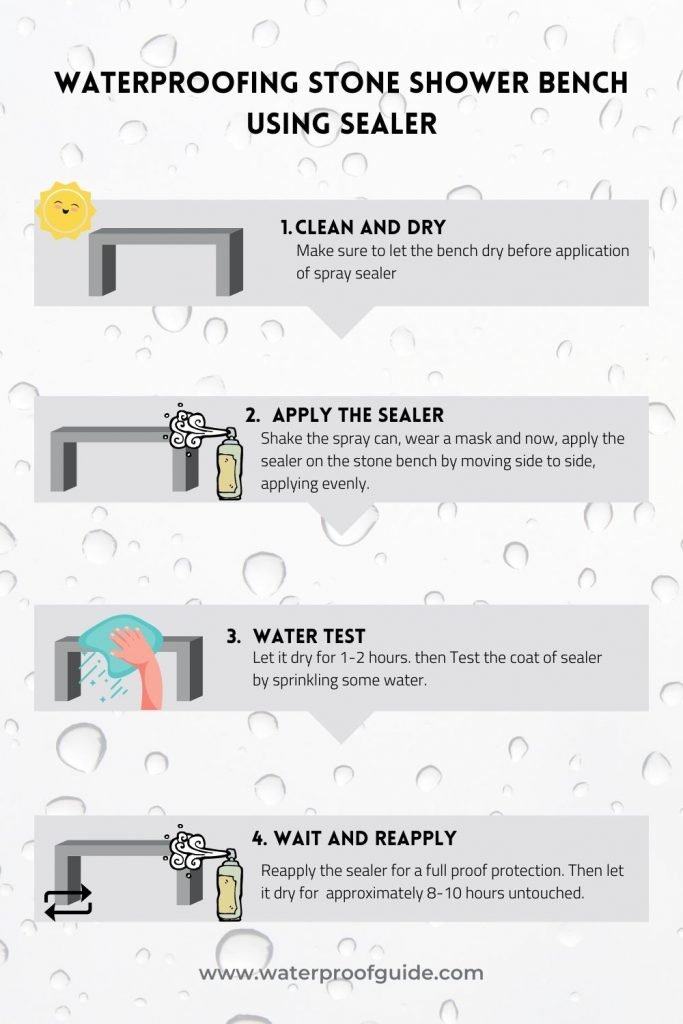
Dry the stone bench properly before application so that the spray sealer can be absorbed by it.
2. Apply the sealer
Shake the spray can, wear a mask and now, apply the sealer on the stone bench by moving side to side, applying evenly.
Using a damp cloth clear excess sealer.
After this, let it dry for 1-2 hours.
3. Water test
Test the coat of the sealer by sprinkling some water. If this water gets absorbed within 1-2 minutes, your sealing still needs some work.
4. Re apply
Reapply the sealer for full-proof protection. Then let it dry for approximately 8-10 hours untouched. This would allow the sealer to set on it.
Precautions:
You should seal your stone seat every 1-2 years to maintain it.
Apart from sealing, you can use a mixture of vinegar, mild soap and water to clean your stone bench every week or at least monthly.
How to Waterproof Plastic Shower Bench?
As you might have guessed, plastic shower benches are already water-resistant. Plastic is a water-resistant material.
Final Words:
Waterproofing shower benches go a long way to protect them against the inevitable forces of water. Cleaning the benches every week or monthly using methods suitable to the material also helps.
Both wooden and stone benches can be sustained for over 20 years. Teak shower benches can be an heirloom too! Be sure to waterproof them.


![How To Waterproof Plaster of Paris? [Procedure & Precautions]](https://waterproofguide.com/wp-content/uploads/2021/12/How-to-waterproof-1-768x402.jpg)
